Purolator Air Filters FAQ
Note: All data gathered from the official NAFA website www.nafahq.org. Please check this source for additional sources utilized when gathering data for these articles.
What is the Merv Rating System?
MERV or Minimum Efficiency Reporting Value, or MERV for short, is a filter rating system devised by the American Society of Heating, Refrigeration and Air conditioning Engineers (ASHRAE) to standardize and simplify filter efficiency ratings for the public.
The higher the MERV rating, the higher the efficiency of the air filter. Simply stated, a MERV 12 filter will remove smaller particles from the air than a MERV 8 filter.
For the consumer, this means that you now have the ability to effectively compare one brand to another. Without any value-added additions, any MERV 8 filter will perform about the same as any other MERV 8 filter. The MERV rating only applies to efficiency.
Merv 1-4 Rated filters will collect most particles of 10 microns or larger. Typical applications of these filters are minimum residential filtration, Light commercials, and minimum equipment production.
Merv 5-8 rated filters are used to trap particles in the 3-10 micron range. Some uses are in industrial and commercial building, high-end residential units, and paint booth/spray and finishing areas.
Merv 9-12 rated filters are used specifically for particles in the 1-3 micron range. High-end residences, upgraded industrial workplaces, and commercial boiling frequently use these.
Merv 13-16 rated Filters remove particles in the 0.3-1 micron range and are used in hospitals, healthcare, and high-end commercial buildings. They are also useful in telecommunication manufacturing facilities.
If allergies or asthma are your concern, we suggest you choose a minimum of a MERV 8 filter.
Filter Basics
Your home filter is also called a "furnace filter". The purpose of your furnace filter is to keep the coils and heat exchanges on the heating and air conditioning system clean. You will want to keep the filter clean to extend the life of your HVAC unit.
The most important thing to remember about home air filters is to change them regularly. To be safe and keep the air in your home clean we recommend changing 1" filters every month, 2" filters every 1-2 months, and 4-5" filters every 3-6 Months.
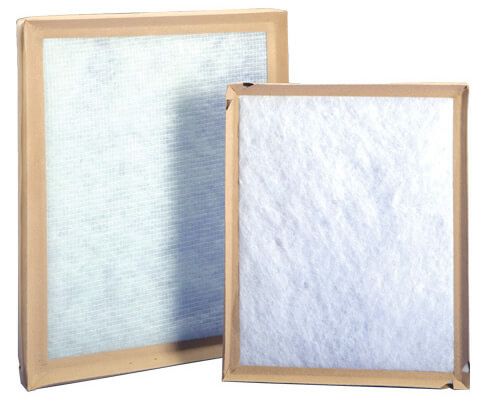
Fiberglass air filters most commonly called "throwaway filters", these are the fiberglass weave or "hog hair" filters that are designed to meet the minimum requirements of protecting your air handler (furnace or Air Conditioner) and its components. NAFA (National Air Filtration Association) no longer recommends using anything under a MERV 7 filter for home HVAC systems.
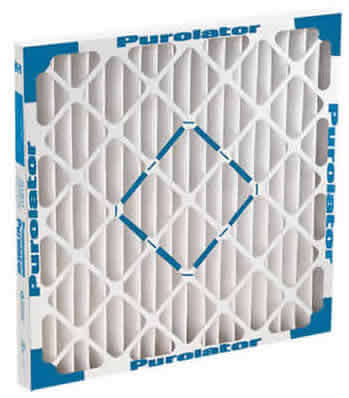
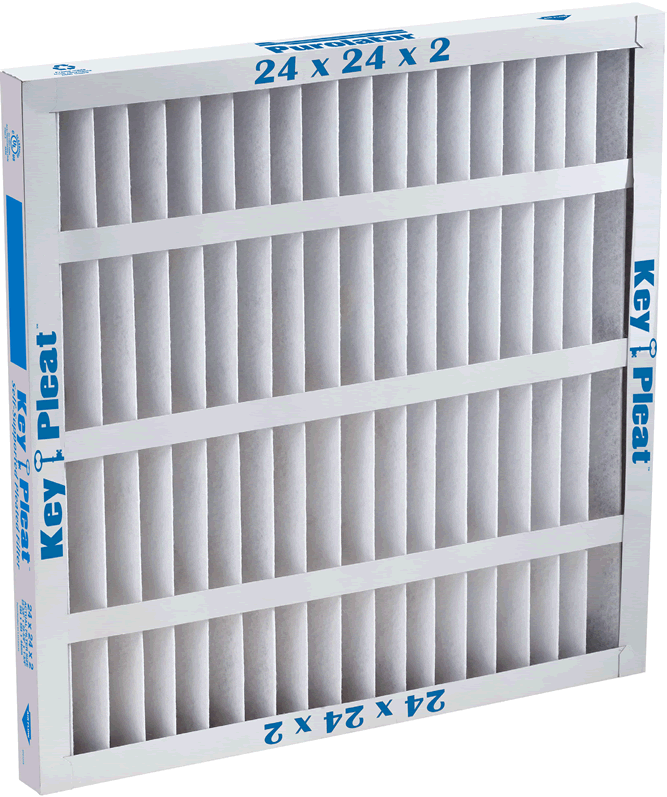
A pleated furnace filter is for those wanting to step up from a basic furnace filter. Pleated filters offer better protection against dust and other airborne particulate.
When should I change my furnace/residential filter?
All filters, whether they're commercial or residential, battle the same three forces of nature
- Resistance to flow
- Amount of dust they will hold
- Efficiency or ability to remove particles from the air
Residential heating and air conditioning equipment present several challenges for the homeowner from the standpoint of air filtration.
The first limiting factor involves filter depth. Most older homes have an air handler with a 1-inch slot for an air filter inside the unit. This filter is changed by removing the door to the unit and removing and reinstalling the filter.
Newer homes have a filter grille, located at the return air opening. This grille is hinged and can be opened to expose a track for a 1-inch filter. In short, regardless of where the filter is located in a residential unit, there is usually only 1-inch in depth allocated for the air filter.
The second limiting factor is the blower horsepower of residential units. The standard unit has a 1/4 or 1/3 horsepower blower that allows for a *limited amount of resistance to the flow of air.
Anything in the system is considered resistance, but the typical things in a residential system are ductwork (a friction factor to the flow of air), air conditioning coils, grilles, and registers, sometimes fire dampers and filter(s).
Resistance in an HVAC system is measured in inches of water - pressure forcing water to rise in an enclosed tube. Residential units can normally have about 0.5 inches of added pressure in the system and the typical unit is allocated only about 0.1 inches (w.g.) for filters.
And, media filters increase in the resistance to flow as they load with dust. This increase in resistance leads to a decrease in velocity of airflow in your unit.
Because of the 1-inch restriction combined with a limited allocation for pressure, homeowners are limited as to their choices of filters for their home without retrofitting the system.
The choices in the 1-inch variety are normally:
- Standard Fiberglass Throwaway Filter - these filters are designed to remove only the larger particles from the air and, in industry-designed testing, do not do very well. These filters do have a very low resistance to the flow of air and, for this reason, they're most often sold for home units.
- Pleated Filters - these filters achieve more filter surface area by folding the media into a 1-inch frame and can use a higher efficiency media without adversely affecting the resistance to flow.
- Others - anything that does not fall into the above two categories (metals, plastics, cellulose, electronics, etc.).
In today's marketplace, higher efficiency filters are available at most retail home stores and homeowners need to be aware that some of these filters (usually in the MERV 11 and higher category) may create low airflow problems in their system.
Note: The higher the MERV number, the higher the efficiency.
Can I use furnace filters as air cleaners for my whole house?
There have been significant improvements on 1" furnace type filters over the last ten years.
The fiberglass furnace filter was originally designed to keep the house ventilation system clean from large particles and debris. Since most of the house furnace blowers are not designed to operate in high static pressure environment, the fiberglass furnace filter can share only a limited amount of pressure drop.
The 1" fiberglass furnace filter with low-pressure drop and low cost naturally became the most common choice.
Two things have changed. The first is a better filter design by adopting a pleated structure to reduce media velocity. Lower media velocity typically leads to higher filter efficiency and lower pressure drop.
Secondly, the variety of specialty media (e.g., tribo-charged media, split fibers, large effective fiber diameter (EFD) melt-blown electret, etc.), has significantly higher initial efficiency with relatively low-pressure drops.
The enhanced performance of some pleated type furnace filters has elevated the traditional role of 1" fiberglass furnace filters from protecting the residential ventilation system to improving the indoor air quality (IAQ) in a residential environment. Pleated type furnace filters, when selected and used properly, can potentially reduce the indoor air pollutants significantly and the advantages are multifold.
For example, for allergy sufferers, houses installed with specialty pleated type media furnace filters can potentially alleviate the symptoms of sneezing, watering eyes, itching throat, postnasal drip, coughing etc. during the pollen season.
The reduction of indoor air particle concentration by pleated type furnace filters can also slow down the settling of dust and respirable particles inside the house.
Field Tests Setup
Seven different new furnaces were evaluated in this study. Identification of the seven filters can be seen in Table 1.
Tests were performed in an actual residential home located in Florida with total square footage of 2900 ft2. The test house is a high ceiling with two stories in half of it. A heat pump with a slot for a 20"x20"x1" furnace filter is the ventilation system used in the house. Air filters used were acquired from local retail stores.
Two TSI PortaCount Plus used as condensate nuclei counters (CNC) and one TSI 3755 (two channels: 0.5-5 and >5 microns) optical particle counter (OPC) was used as the primary monitoring instruments in this study.
One CNC (#1) was placed on a ground floor dining table close to one corner of the house.
One CNC (#2) was placed in a second-floor bedroom whose location was in the exact opposite end of a diagonal of the house relative to the first CNC.
The two-channel optical particle counter was placed in the first-floor master bedroom. It forms a triangle (with the other two CNCs) that covers three corners of the house. Each monitoring instrument was connected to a computer for data acquisition.
CNC recorded the particle concentration from 0.02-1 mm and the sampling time was set at 15 seconds for each sampling period. The optical particle counter recorded the results of particle concentration in the range of 0.5-5 mm (respirable particle size range) and the sampling time was set at 20 seconds for each sampling period. Combination of those two types of instrument covers the particle size range from 0.02 to 5 mm.
Since the main objective of the study is to see how effective is each furnace filter working as a whole-house room air cleaner. The decay of particle concentration vs. time inside the house is the primary focus of each test.
Table 1. Furnace Filters Used in Field Tests
| Description | Media Type | Property |
|---|---|---|
| MERV11 | Split Fiber (Fat Fibers) | Electret |
| MERV12 | Melt-Blown | Electret |
| MERV8 | Cotton and PET Mixed | Non-Charged |
| MERV10 | Tribo-Charged (Fat Fibers) | Electret |
| MERV12 | Tribo-Charged Composite | Electret |
| Glass Fiber | Fiberglass Throwaway-type | Non-Charged |
| CFP* MERV8 | Composite Filter Pads* | Non-Charged |
Field Test Procedures
Several sliding doors and windows were open to let outside ambient particles enter the house through natural ventilation.
Particle concentrations were monitored throughout the house to make sure the particle concentrations were stable before each experiment started.
All the sliding doors and windows were then closed once the particle concentration was stable inside the house.
All three counters were then reset to start to record the data of each test.
The blower of the ventilation system was not turned on for another 10 minutes to establish the initial baseline (particle concentration).
Each test lasted 3-8 hours depending on the performance of each furnace type filter.
No activities or human movements occurred during each test.
A background test was also performed. All the doors and windows were closed. The blower was off and there was no activity or any movement in the house. CNC#1 and OPC recorded the particle concentration over a period of time.
Results and Discussion
The data collected in the first 10 minutes of each test were averaged and used as the initial concentration. The numbers collected by each instrument after the blower was turned on were divided by the initial concentration and represented as the percentage of the original concentration.
Fig. 1 illustrates the decay curves of the CNC #2 placed on the second floor. The CNC #2 was not available when the test was performed for the WEB furnace filter. The results are very close to those collected by CNC#1. The time that requires removing 50%, 75% and 87.5% of the initial particle concentration for each tested filter is shown in Table 3.
Why is air filtration important?
Air filtration supplies the means to obtain the level of particulate cleanliness required by any definition of "air conditioning." It extends from the simple task of preventing lint and other debris from plugging heating/cooling coils to removing particles as small as 0.1 microns which could cause a short circuit on a microchip.
In addition to the reasons given above, air filters are used for a wide variety of purposes, some of which include:
- Protecting the general well-being of the occupants of a space
- Protecting the decor of occupied spaces by removing the staining portion of airborne dust
- Reducing maintenance of building interiors by reducing the frequency of washing such items as Venetian blinds and fluorescent bulbs
- Protecting the contents of occupied spaces including paintings, tapestries, and other items of historic or cultural value
- Elimination of fire hazards by removing lint and other materials which might accumulate in ductwork
- Extension of shelf life of perishable dairy products by removing airborne mold during processing operations
- Removing airborne bacteria from operating room air to help prevent postoperative infection
Air filtration for schools
The Problems
The statistics are a bit unnerving;
53 million school children and 6 million teachers, administrators and others walking into 120,000 school buildings every day – at least 50% of these schools have been diagnosed with indoor air quality problems.
The Department of Energy says, "Our nations K-12 schools are challenged to serve a growing student population and rising community expectations with aging buildings, constrained operating budgets, and ever-increasing energy bills." Each year, taxpayers spend $6 Billion on energy for these schools – about 25 percent more than necessary. That $1.5 Billion could be redirected to hire 30,000 new teachers or purchase 40 million new textbooks annually.
Add to this energy bill another alarming statistic:
The American Lung Association estimates show 6.3 million school-aged kids miss about 10 million days of school with asthma and, as result, asthma is the leading cause of school absenteeism. The Center for Disease Control and Prevention estimates approximately 14 Million school days per year are lost because of asthma exacerbated by poor indoor air quality in schools.
Particulates in the Air
Because schools represent a much denser population percentage than a typical commercial office building, the bio-burden becomes even greater.
Viable and non-viable particulates brought in on people's clothing and through open doors and windows add to the activity level of most young people which increases the shedding of skin cells and other particulates causing school air to be some of the dirtiest air in any environment.
Many schools utilize low efficiency (MERV 1-4) filters that remove minimal levels of all particulate matter.
For any parent who has taken their child to school first thing in the morning and picked them up in the afternoon, the difference in the smell of the school at the end of the day is astonishing. For those in the school, they have become accustomed to the odor and do not realize their air is full of particulates and odors.
| Aerodynamic Diameter (micron) | Likely Region of Deposit |
|---|---|
| > 9.0 | Filtered by nose |
| 6.0 to 9.0 | Pharynx |
| 4.6 to 6.0 | Trachea / Primary Bronchi |
| 3.3 to 4.6 | Secondary Bronchi |
| 2.15 to 3.3 | Terminal Bronchi |
| 0.41 to 2.15 | Alveoli |
With these tremendous problems comes tremendous opportunities for collaboration of schools with NAFA Certified Air Filter Specialists (CAFS).
NAFA members across the world have stepped forward to help local schools provide better air filtration and cleaner environments for their students. Here are just two examples:
Case Study #1
Norpsec Filter, Ltd.
Sarnia, ON
President – Bob Jackson, CAFS
Norspec Filtration Ltd. in Canada worked with the Thames Valley District School Board beginning in 2000. TVDSB began to realize that their "low bid" contract for air filters was not working when parents, teachers and custodial staff began complaining. They revised their air filter requirements with the note that they were looking for solutions to their air quality problems.
Norspec made a presentation to TVDSB outlining an "Air Filter Management Program" that included replacement of all low MERV # filters with MERV 8 pleated filters along with MERV 8 synthetic ring and link panels.
Next, Norspec assisted with the development of a change-out schedule that involved a 3-month survey of all 195 school locations to verify size, quantity, and existing status of the air handling system.
Finally, they worked with the school district to assemble a "Filter Committee" with representatives from Norspec, along with school officials and personnel from purchasing, maintenance and health & safety that met on a quarterly basis to assess proposed solutions along with addressing any filter issues brought to the committee.
Each school had its own filter change schedule and filter order sheet with specific times and dates for ordering and changing.
The program was monitored by the Filter Committee. This monitoring revealed that the individuals involved in changing air filters knew little about air filtration.
With more than 400 people involved, Norspec held 5 training sessions – one in each region of the district.
Over the intervening years, this training has become a yearly event to accommodate new personnel and reacquaint existing employees with filtration concepts.
The Filter Committee continues to meet regularly to discuss issues, troubleshoot problems and look for better ways to improve overall air quality.
As a result of this partnership between TVDSB and Norspec, the school has realized cost savings from reduced change-outs in many schools, along with the reduction of storage and damage.
With the improvement in air quality at the schools the Board has reported significant cost savings in other areas such as housekeeping and equipment maintenance.
In 2004, Norspec Filter nominated Thames Valley District Schools for the NAFA Clean Air Award which they subsequently received.
This case study shows the value that NAFA-member companies can bring to facilities with knowledge and training along with higher efficiency filters to help provide clean air in the schools.
Case Study #2
Air Industries, Inc.
North Andover, MA
Stephen W. Nicholas, CAFS, NCT
The Keefe Technical School is a 30-year-old facility with approximately 300,000 sq. ft. of space. They provide classes and training for (13) different vocational/technical careers including automotive, woodworking, plumbing, electrical and various other trades. They also have a gymnasium, swimming pool and offer several cooking classes as well.
The school recently had the Heating, Ventilation, and Air-Conditioning, (HVAC) ductwork and coils cleaned. They were now looking for ways to keep their HVAC system components hygienically clean to improve and maintain acceptable Indoor Air Quality for the students, faculty, and staff.
The Plant Engineer, Ken Whidden arranged for instruction, training, and testing for custodial and maintenance staff including the HVAC Supervisor Tim Rivers with the latest technology required to maintain the school's HVAC air filtration systems.
The training programs provided HVAC Air Filtration Choices for Today, The U.S EPA's Tools for Schools Program as well as Indoor Air Quality. The staff also participated in and successfully completed training and testing of the National Air Filtration Association, (NAFA) Certified Technician, (NCT) program.
Original Equipment
The original equipment manufacturer (OEM) HVAC air filters were a 20-25% (MERV 6) 5 cartridge type filter. These filters remove 35-49.9% of particles in the 3-10 micron size range.
The pressure differential gages used were the inclined tube manometer without any gage oil to accurately read air filter pressure drop. The initial (clean) filter static pressure operating @ 400-450 feet per minute, (FPM) is .15" in water gage (w.g.).
The gasket material on the filter holding frames and air handler doors was deteriorated and in many instances missing altogether.
To replace each filter the technician would spend approximately 4-5 minutes to remove and replace the new (clean) filter cartridge.
Filter Upgrade
The School wanted to upgrade the filtration efficiency to meet or exceed the filter efficiency required by ASHRAE Standard 62.1 "Ventilation for Acceptable Indoor Air Quality" under section 5.9 Particulate Matter (MERV 6). They also wanted to spend less time installing the filters that would allow more time to address other maintenance duties.
The other objective was to keep the HVAC system components hygienically clean and to reduce coil and duct cleaning as well. The school also wanted to improve the overall Indoor Air Quality, (IAQ) with higher efficiency air filters.
Implementation
Several air filter product types were evaluated for:
- Efficiency/MERV
- Documentation/Test Reports
- Construction Quality
- Initial Cost vs. Life Cycle Cost/Operating Cost
- Labor/Installation
The products selected for the upgrade were a 4" deep high capacity extended surface pleated (MERV 11) air filter effectively removing 65-79.9% of 1-3 micron size particles.
This efficiency level addresses the US EPA PM 2.5 Standard. Particulates of 2.5 microns may potentially cause lung infection and possible disease.
These 4" high capacity pleated filters have approximately the same amount of media (26.1 sq. ft.) as the original (MERV 6) 8" deep cartridge filters (29 sq. ft.).
The initial clean filter static pressure @ 400-450 FPM is .21" w.g which is a negligible .06" w.g. differential.
The 4" filters were installed in the existing filter holding frames with new filter latches.
Closed cell neoprene gasket material was installed on the filter holding frames and doors of the air handling equipment.
The time to remove and install the 4" filters took approximately 15-20 seconds each compared with an estimated 4-5 minutes it took for the original 8" cartridge type.
Magnehelic gages were properly installed on all air handling units. This allowed the technicians to effectively measure monitor and manage the air filter change-outs by air flow pressure drop.
Having the HVAC technicians and custodial staff successfully complete the NAFA Certified Technician program provided the means for the school to have qualified trained technicians with the skills necessary to maintain the HVAC air filtration system providing cleaner supply air to the students, faculty and staff.
Summary
The upgraded filter efficiency and long life cycle of the 4" (MERV 11) pleated filters vs. the (MERV 6) 8" cartridge type filters saved on labor and associated disposal costs.
The higher efficiency filters will also keep the HVAC ductwork clean while operating the heating and cooling coils at peak energy efficiency.
The overall IAQ was also improved with the higher efficiency pleated filters.
Products selected by Ken Whidden and Tim Rivers of the Engineering/Maintenance Department of the Keefe Technical School can be implemented by other school departments and educational facilities that are looking to improve overall IAQ, equipment efficiency and system performance.
Building owners and facility managers will also save on valuable energy consumption scheduling air filter change-outs on pressure drop while providing a safe, clean and comfortable Indoor Air Environment for all the students and occupants in our school systems today.
1. NAFA (NCT) Program based on the NAFA Installation Operation and Maintenance of Air Filtration Systems.
2. ANSI/ASHRAE Std. 52.1-1992 Gravimetric and Dust Spot Procedures for Testing Air-Cleaning Devices Used in General Ventilation for Removing Particulate Matter Cleaner Air and Lower Costs?
YES, The National Air Filtration Association is dedicated to providing training and certification to those involved in providing clean air to building inhabitants.
Most of the time, the lowest initial cost air filter is not the lowest overall cost air filter when energy, storage, change schedules and disposal costs are included.
NAFA member companies have the skills and information along with technology tools to help school personnel determine the correct filter for the application, the appropriate change schedule, and the training and certification for air filter technicians that combine to give value and cost savings in almost every application.
How effective is Germicidal UV Radiation for reducing Fungal Contamination within air-handler units?
Fungal taxon isolated |
Concn (103 CFU/cm2) |
|||
Study floor |
Control floor |
|||
May |
September |
May |
September |
|
| Acremonium |
|
0.65 (0.65) |
5.81 (5.81) |
23.81 (23.68) |
Aspergillus versicolor |
64.87 (38.56)c |
0.96 (0.56)d |
87.58 (32.95) |
1,765.46 (1,702.1)d |
Cladosporium (unknown) |
135.28 (50.38) |
8.42 (5.22)d |
22.68 (10.19) |
95.31 (37.74)d |
Cladosporium cladosporioides |
0.26 (0.26) |
5.04 (5.04) |
0.65 (0.39) |
228.59 (226.92) |
Cladosporium (other) |
|
0.13 (0.13) |
|
1.72 (1.60) |
Curvularia |
|
0.05 (0.05) |
|
|
Hyalodendron |
4.65 (3.84) |
13.95 (13.95) |
83.96 (83.10) |
109.66 (72.09) |
Penicillium |
8.16 (4.35) |
1.05 (0.63) |
9.27 (8.11) |
16.0 (15.59) |
Sporothrix |
0.01 (0.01) |
|
|
|
Nonsporulating colonies |
0.04 (0.04) |
|
1.94 (1.94) |
|
Total |
213.27 (82.53) |
30.51 (24.85) d |
211.89 (10.80) |
2,240.55 (1,622.4) d |
a UV lamps were used only on the study floor
b May concentrations were measured before the UV lamps were turned on
c Mean (standard error).
d The concentrations on the control floor and the study floor were significantly different after the use of germicidal UV lamps (P < 0.05).
Table 2.
Mean concentrations of viable airborne fungi during disturbance sampling within AHUs before and after installation of germicidal UV lamps.
Fungal taxon isolated |
Concn (102 CFU/m3) |
|||
Study floora |
Control floor |
|||
May |
September |
May |
September |
|
| Acremonium | 0.11 (0.10)c |
|
0.16 (0.10) |
0.10 (0.10) |
Alternaria |
0.02 (0.01) |
0.01 (0.01) |
0.02 (0.01) |
|
Aspergillus |
3.08 (2.58) |
0.91 (0.48)d |
1.89 (0.27) |
7.46 (3.37)d |
Cladosporium |
15.64 (8.83) |
1.28 (0.5)d |
14.75 (9.25) |
11.87 (1.99) d |
Epicoccum |
|
|
|
0.04 (0.04) |
Humicola |
|
|
0.01 (0.01) |
|
Hyalodendron |
0.07 (0.03) |
|
0.02 (0.02) |
|
Penicillium |
2.18 (0.28) |
0.68 (0.28) d |
5.39 (2.36) |
220.05 (63.06) d |
Sporothrix |
0.11 (0.11) |
|
|
|
Yeast |
0.10 (0.03) |
0.05 (0.02) |
0.06 (0.03) |
|
Nonsporulating |
0.33 (0.09) |
0.06 (0.02) |
0.25 (0.03) |
|
Total |
21.65 (11.27) |
2.98 (1.06) d |
22.55 (11.1) |
239.52 (58.55) d |
a UV lamps were used only on the study floor
b May concentrations were measured before the UV lamps were turned on
c Mean (standard error).
d Concentrations on the control floor and the study floor were significantly different after the use of germicidal UV lamps (P < 0.05).
Table 3.
Concentrations of total airborne fungal spores during disturbance sampling within AHUs before and after installation of germicidal UV lamps
Fungal taxon isolated |
Concn (103 spores/m3) |
|||
Study floora |
Control floor |
|||
May |
September |
May |
September |
|
| Alternaria | 0.04 (0.03) c |
|
|
|
Cladosporium |
29.54 (8.75) |
5.43 (3.35) d |
19.00 (14.16) d |
68.42 (30.91) d |
Penicillium-Aspergillus |
27.49 (20.92) |
6.69 (2.09) d |
5.63 (2.55) |
186.56 (52.51) d |
Ascospores |
0.01 (0.01) |
0.01 (0.01) |
0.03 (0.01) |
|
Basidiospores |
0.12 (0.06) |
0.04 (0.02) |
0.05 (0.03) |
0.06 (0.04) |
Smuts |
0.03 (0.01) |
|
0.01 (0.01) |
0.04 (0.02) |
Other |
0.70 (0.25) |
0.24 (0.06) |
0.47 (0.2) |
1.46 (1.09) |
Total |
57.92 (25.09) |
12.41 (4.47) d |
25.19 (16.73) |
255.54 (82.27) d |
b May concentrations were measured before the UV lamps were turned on
c Mean (standard error).
d Concentrations on the control floor and the study floor were significantly different after the use of germicidal UV lamps (P < 0.05).
What is cleanrooms, minimum testing criteria?
(Ed. Note: The largest number of cleanrooms is divided between the semi-conductor industry, driven by increased yield (or decreased cull rates), and the pharmaceutical/ medical device industry driven by health-related concerns of not causing death or illness to the public along with FDA regulatory concerns. In this article, Mr. Brande presents his views on what the absolute minimum testing criteria should be for a cleanroom to be "certified.")
There are five tests and/or calculations that must be performed in order to prove four objectives that qualify a cleanroom as functional:
One
Demonstrate that the controlled area meets the desired classification (Class ISO 5; Class ISO 6; Class ISO 7 or Class ISO 8).
Required TestRoom classifications according to ISO 14644-1, or the now defunct Federal Standard 209E, to establish that the desired room class has been met.
Two
Demonstrate that no particulate will enter the controlled area by way of the supply air mechanical system.
Required TestIntegrity testing of the HEPA filtered supply (or exhaust) air with an oil aerosol (ambient challenge not accepted here) to show no bypass of airflow and potentially detrimental particulate.
Three
Demonstrate that no particulate will enter (positive) or exit (negative) the controlled area due to construction (wall and/or ceiling utility penetrations, mouse holes and threshold gaps).
Required TestDifferential pressures will indicate that both direction and magnitude of static pressures is sufficient to control migration of particulate from one controlled area to another (or even an uncontrolled area).
Four
Demonstrate that, should there be an episode of particulate generation within the controlled area, the design of the room will handle the particulate in a "controlled" and timely manner.
Required TestControlled area volumes (sometimes recorded in the form of velocities and converted) and subsequently the room air exchange rates are used to determine if there is sufficient airflow into a controlled area to neutralize (dilute) any short term potential source of particulate in an area and also maintain the required static pressures.
Five
Required TestFinally, airflow visualization (a picture is worth a thousand words) for the definitive answer as to whether a controlled area can truly control particulate.
"If I could perform only one test in a Class ISO 5 (Class 100) environment, this would be my choice. In my opinion, more pertinent information can be derived from this test than all of the other standard tests listed in either IEST-RP-CC006.3 or ISO 14644 Part 3."Note: In areas Class ISO 6 (Class 1000) and higher, this test takes on another form called room recovery and is not quite so 'visual'. Bear in mind, that both tests are considered destructive in terms of trying to maintain sterility.
NAFA Position Statement on Ozone Generators
Because NAFA supports the position stated by the Environmental Protection Agency that, "...Ozone can be harmful to health," NAFA opposes the use of ozone-producing equipment used as air cleaners or air purifiers in occupied spaces.
Therefore, NAFA adopts the position that ozone air cleaner manufacturers or ozone air cleaner distributors not be allowed into NAFA membership, unless or until they cease the marketing of these types of products as air cleaners in occupied spaces.
This does not preclude membership to those who sell these devices for use in unoccupied spaces.
Contact your local NAFA member company, and ask for a NAFA Certified Air Filtration Specialists (CAFS) to survey your systems and assist in selecting the proper filters for your needs and applications.
Additional Information: www.epa.gov