Glossary
Actual Size: The true size of the filter. See Nominal SizeAirflow: Quantity of air passing through a filter at a stated velocity commonly measured in cubic feet per minute (CFM) or cubic meters per minute (CMM).
AMC: Airborne Molecular Contamination
Anthrax: An infectious and usually fatal disease most commonly found in animals. Recently, anthrax has been used on humans as a form of bioterrorism.
ASHRAE: American Society of Heating Refrigeration and Air Conditioning Engineers; Publishes standards and guidelines for HVAC systems
Bacteria: Major groups of living organisms with simple cell structures. Many pathogens are bacteria.
Bioterrorism: Using living things, such as pathogenic organisms like anthrax, for terrorist activities
Capacity: Volume of air per unit time that a clean filter can handle at a specified pressure drop
CBR: Chemical Biological Radiological
CFM: Cubic Feet per Minute. A measurement of airflow rate.
Cleanroom: A room with a controlled level of contamination determined by the number of particles per cubic foot
CMM: Cubic Meters per Minute. A measurement of airflow rate.
DOP: Dioctyl Phthalate
Downstream: The side of the filter that the air blows out of, having been filtered.
Efficiency: A filter's ability to remove particles of a specified size from the air
Efficiency Test: A test to determine the particle removal efficiency of a filter. A testing agent is introduced upstream. The particle concentration is measured both upstream and downstream of the filter with laser particle counters or photometer. The ratio of these measurements is the particle removal efficiency, such as 99.99%.
Enzyme: Any protein or group of proteins produced by a living organism functioning as biochemical catalysts
EPDM: Ethylene-Propylene-Diene-Monomer; a type of rubber commonly used for gaskets
Faceguard: Screen attached to the face of a filter to protect the filter media
FDA cGMP: Food and Drug Administration Current Good Manufacturing Practices
FFU: Fan Filter Unit. A product that contains both a fan and a filter, or set of filters.
FM: Factory Mutual
FPM: Feet Per Minute. A measurement of air velocity.
Frame: Aluminum, wood, steel, or other material into which the filter pack is inserted.
Gasket: Rubber or sponge-like material used to prevent air leaks between the frame and its housing when they are compressed together
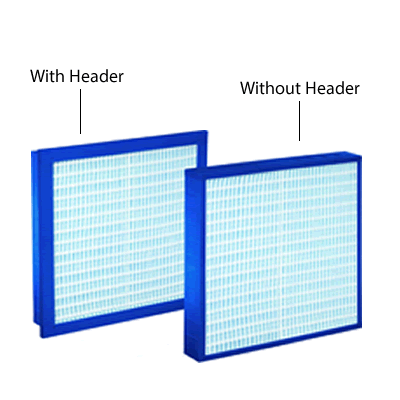
Header: An extension of the frame used to hold the filter in place, and aids in creating a seal; similar to a flange
HEPA: High Efficiency Particulate Air
IAQ: Indoor Air Quality. IAQ is concerned with the health and comfort of the air inside buildings.
Inches of Water Gauge (in.W.G.): A measurement that indicates the amount of pressure drop in inches. 1 in.W.G. is equivalent to about 250 Pa.
ISO: International Organization for Standardization
JIS: Japanese Industrial Standard
m/sec: Meters per Second. A measurement of air velocity.
Make-up Air: Unfiltered air introduced to a re-circulated air system
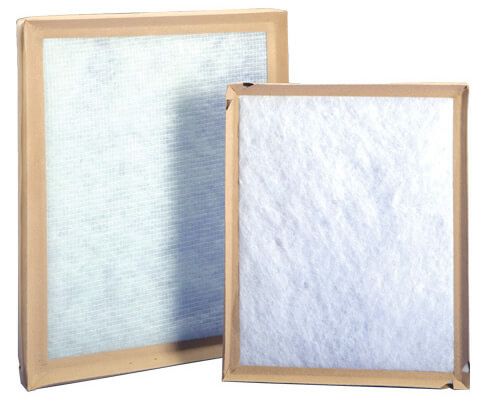
Media: Filtering material. Common types of media include glass fiber, synthetic fiber, non-woven fiber, and PTFE.
MERV: Minimum Efficiency Reporting Value
Micron (u): One millionth of a meter
MIL-STD: (United States) Military standard
MSDS: Material Safety Data Sheet. Indicates the specific materials that make up a product or compound
NAFA: National Air Filtration Association
Neoprene: Synthetic rubber commonly used for gaskets
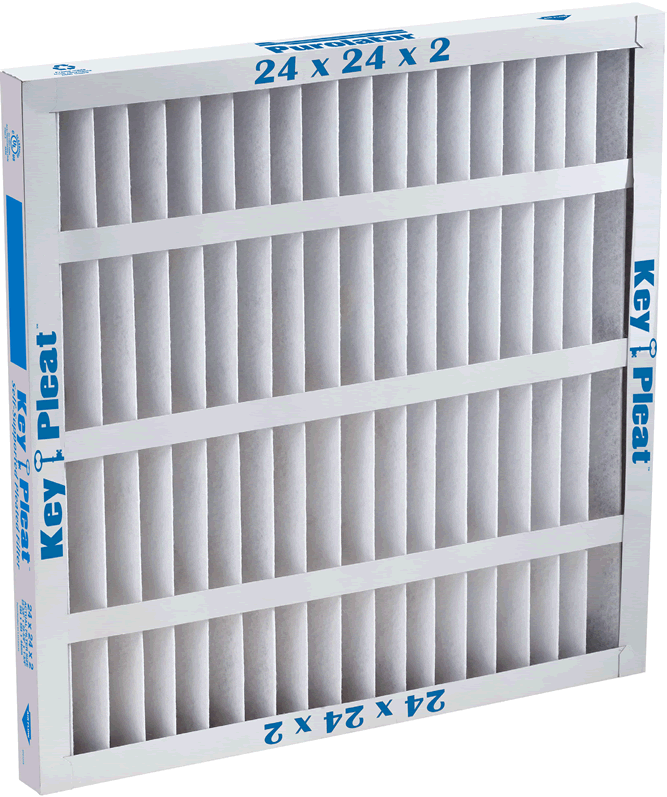
Nominal Size: The size of the filter on the label, for example, 24 x 24 x 12. The actual dimensions of the filter may vary. See Actual Size
Outgassing: The release of a gas from some material (for example, filter media)
Pack: Combination of media and separators
PAO: Poly Alpha Olefin. May be used in the filter industry to test the effectiveness of air filters.
Particulate: Tiny particles of solid or liquid suspended in the air ranging from 1 nanometer to 100 micrometers in diameter
Pascal (Pa): A unit that indicates the amount of pressure drop. It is the SI (International System of Units) equivalent to in.W.G. 250 Pa is approximately 1 in. W.G.
Pathogen: Something that causes disease, for example bacterium or fungus
Polyurethane: Various resins used as a sealant to attach the pack to the frame and to provide a seal against leaks
Pressure Drop: Resistance to airflow created by an air filter. Measured in inches water gauge or Pascals. A lower pressure drop is generally preferred.
PSL: Poly Styrene Latex. May be used to test the effectiveness of an air filter.
PTFE: PolyTetraFluoroEthylene; a non-shedding, organic material used as filter media.
Rated Airflow Volume: Specific quantity of air recommended by a filter manufacturer to be handled by a filter. (The volume of airflow at which the filter is tested)
Re-circulated Air: Air that has been taken from a space, reconditioned (making necessary adjustments to temperature, humidity and cleanliness) and returned to the space
SARS: Severe Acute Respiratory Syndrome. Respiratory infection which causes fever, coughing, or difficulty breathing. SARS can be fatal.
Scan Test: Commonly called a leak test, used to find air leaks in filters. An aerosol is sprayed upstream from the filter and a laser particle counter on the downstream side is used to detect particles which signify leaks. Common aerosols used in scan tests include DOP, PSL, PAO, and Silica
Sealant: Adhesive or other material intended to create a leak-proof seal between the pack and the frame
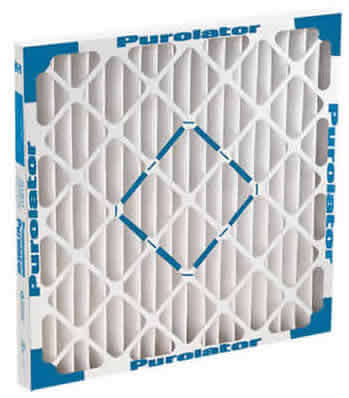
Separators: Aluminum, plastic, or other material used to separate folds of pleated media to create channels for the air to flow through
Silica: May be used in the filter industry to test the effectiveness of an air filter.
Supply Air: Air which has been conditioned and delivered to a specific space. Supply air can be 100% outside air, 100% re-circulated air, or a combination.
UL: Underwriters Laboratory; A testing laboratory that develops standards and test procedures which are targeted towards measuring product safety
ULPA: Ultra Low Penetration Air
Upstream: The side of the filter that the air blows into, before being filtered.
Urethane: Resin used as a sealant
Virus: Particulate matter containing RNA, DNA and protein. Viruses invade bacteria cells in plants and animals and replicate by feeding from the host cell.